Outbound is producing more pipelines than ever in 2026. Not for everyone. For the teams running these seven plays, qualified meetings are up. For everyone else, reply rates are falling every quarter, and the gap is widening fast.
The numbers tell the story clearly. The average B2B cold email reply rate has dropped to 3.43% platform-wide, according to the Cold Email Benchmark Report. Similarly, according to Gartner, B2B buyers spend just 17% of their total buying time talking to any vendor, and that time is split across every supplier they are evaluating. Yet teams running coordinated multi-channel sequences are seeing 287% more responses than those running single-channel outreach.
The difference is not the budget. It is not headcount. It is whether the team adapted.
Building a successful outbound sales strategy in 2026 means adapting to buyer signals instead of relying on raw volume. The seven plays below reflect today’s outbound sales best practices, not recycled advice from five years ago.
This post covers seven named outbound plays you can run this quarter, the KPIs that tell you whether they are working, and the team structure to scale them. New to outbound and want the foundation first? Start with the foundational outbound guide. If you already know what outbound is and want plays, keep reading.
What Separates a Working Outbound Strategy from a Failing One
Most outbound programs are not failing because of bad reps or weak products. The real problem is optimizing for the wrong thing.
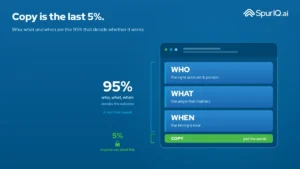
Failing programs measure activity: dials, emails sent, and LinkedIn connections requested. Working programs measure signal-fit: reaching the right account at the right moment with the right message. More volume on a broken targeting model just accelerates the burn rate.
Three things every working outbound program shares:
- Tight Account Selection: Not every company in the ICP is worth targeting this week. Working programs filter by timing signals, not just by firmographic fit.
- Channel Intent, not Just Channel Coverage: It is not enough to be present on email, LinkedIn, and phone. Each touch has to be deliberate. The channel matches the stage of the sequence and the signal that triggered outreach.
- Measured Execution Per Stage: Working programs track what happens between the activity and the pipeline. They know where prospects drop off and why.
The research consensus is consistent across every major study: signal-led prospecting outperforms list-led targeting, sequenced multi-channel cadences outperform single-channel blasts, and personalization at scale requires a tiering system, not a choice between deep and shallow.
Every b2b outbound sales strategy worth running starts with knowing which signals to chase first. The seven plays we’ll talk about in the next section shows how working teams operationalize those three principles.
The 7 Outbound Sales Plays for 2026
Most outbound teams are not losing deals because of bad products or weak reps. They are losing them because of broken timing, shallow personalization, and playbooks built for a market that no longer exists.
Play 1: Lead With Signals, Not Lists
Replace your static list with a live signal feed and watch timing compress.
The problem with static lists is not the data. It is the shelf life. A contact list goes stale within 60 to 90 days. By the time a rep reaches the tenth person on that list, the budget has shifted, the priority has changed, or a competitor already got in the door. Signal-led prospecting solves the timing problem. Instead of reaching people who might be interested, you reach people who are showing you right now that they are.
There are seven categories of B2B buying signals worth building outreach around:
- Funding Announcements (Series A, B, or C): Budget just landed. The company is actively solving problems. A well-timed email that connects your offer to the growth challenge they just took on converts at a far higher rate than a cold reach-out two quarters later.
- Hiring Signals: Open roles tell you exactly what problem a company is trying to solve. An organization posting five SDR roles is investing in the pipeline. An organization posting a VP of RevOps is building infrastructure. Your outreach angle writes itself.
- Executive Job Changes: A new VP or CRO typically runs a vendor evaluation in their first 90 days. They are not yet locked into existing contracts. They are looking for wins. This is one of the highest-converting signals in B2B outbound.
- Third-Party Intent Spikes: When a company’s team is consuming content around topics relevant to your offer on external platforms, they are researching a problem you can solve. Intent data tells you who is in-market before they raise their hand.
- Website Visits: A company visiting your pricing or competitor comparison pages is a warm signal. Someone from procurement browsing your case studies at 11 PM is not a random event.
- Competitor Mentions: A prospect talking publicly about a competitor’s product is telling you they are in the evaluation phase. That is the right moment to enter the conversation, not after a decision is made.
- G2 and Review Platform Activity: Prospects researching alternatives on review platforms are actively comparing. This is one of the clearest late-stage signals in B2B sales.
Each signal type warrants a different opening line. A funding signal opens with budget and growth alignment. A job-change signal opens with empathy for the new role and the pressure of the first 90 days. A competitor’s mention opens with a specific contrast. Generic openers waste the signal entirely.
For a deeper look at how each signal category works, see B2B buying signals and the full breakdown of buying signals vs intent data.
What good looks like: Signal-led sequences consistently produce reply rates two to three times higher than cold sequences run against the same ICP. If your signal-led outreach is performing at the same rate as your list-based outreach, the signals are not being used to drive the opener. They are being used for decoration. These signal categories double as practical outbound sales tips for prioritizing your list each week.
Play 2: Tier Your Personalization
Personalize everything, and you run out of time. Personalize nothing, and you run out of pipeline.
Most teams treat personalization as a binary decision: either they deep-research every prospect, or they blast templated sequences. Both fail at scale. Deep research on 300 prospects a month is a full-time job. The solution is a tiering system. Split your prospect list into three brackets based on account fit, deal size, and signal strength, then apply a different personalization depth to each.
| Tier | Share of List | Personalization Depth | Time Per Lead |
| Tier 1 | Top 10% | Deep research, custom angle, specific signal reference | 10–15 min |
| Tier 2 | Middle 30% | Signal-based hook, templated body, role-relevant pain | 2–4 min |
| Tier 3 | Bottom 60% | ICP-fit light personalization: name, company, role, pain | Under 60 sec |
- Tier 1 accounts are your highest-fit, highest-value targets. These get a genuinely bespoke email, a specific research angle, and possibly a handwritten note or video. Ten to fifteen minutes per lead is not excessive; it is the correct investment for an account that could represent significant revenue.
- Tier 2 accounts get a signal-based hook pulled from whatever trigger brought them into the list, paired with a tested, templated body. Two to four minutes here is achievable without sacrificing quality.
- Tier 3 accounts get ICP-fit personalization: the right name, the right company, and a pain point relevant to their role. Under sixty seconds per lead using AI-assisted research tools is realistic and sufficient.
This is the only model that lets a single SDR work with 200 to 300 prospects per month while protecting quality where it matters most. That tiering discipline is what separates a successful outbound sales strategy from one that burns through good leads.
What good looks like: On signal-led lists: Tier 1 reply rate of 15% or higher, Tier 2 at 7% or higher, Tier 3 at 3% or higher. If Tier 1 is performing at the same rate as Tier 3, the personalization is not doing its job. Revisit the research depth before adding more volume.
Play 3: Sequence Multi-Channel, Don’t Run Channels in Parallel
Running email, phone, and LinkedIn on the same day is not a good idea. It is more noisy.
Prospects have developed fast, accurate pattern recognition for automated multi-channel outreach. When an email, a LinkedIn connection request, and a phone call arrive within hours of each other, the prospect does not think “this rep is thorough.” They think “this is a sequence tool”, and they ignore the whole thing.
The fix is sequencing: varying the channel by touch across a deliberate timeline, so each contact feels intentional rather than automated.
A working 10-to-18-touch B2B sequence looks like this:
- Days 1 to 10: Front-load with email and LinkedIn. Warm up the relationship before asking for anything. The email introduces the signal or context. The LinkedIn touch builds familiarity.
- Days 10 to 25: Introduce the phone once the written context exists. A call on day two is cold. A call on day twelve, after two emails and a LinkedIn connection, is a follow-up. That distinction matters to the prospect.
- Days 25 to 45: Shift to asymmetric channels for breakthrough. Video messages, voice notes, and direct LinkedIn messages stand out in a sequence that has been email-heavy. These touches are designed for the prospects who opened but did not reply.
- Final touch: A clean breakup message. Something honest and low-pressure that leaves the door open. Breakup messages reopen 6 to 12% of cold sequences that had gone dark.
Calibrate sequence length to deal size. Mid-market accounts typically need 10 to 12 touches across four to six weeks. Enterprise accounts need 12 to 18 touches across eight to twelve weeks. Running a mid-market sequence on enterprise accounts leaves the pipeline on the table at the exact moment when persistence matters most.
A working cadence runs on three layers: a data source to build and enrich the list (Apollo, ZoomInfo, LinkedIn Sales Navigator), a sequencing tool to run the cadence (Outreach, Salesloft, Smartlead), and a CRM to capture what happens (HubSpot, Salesforce). The right combination for your stack is covered in the dedicated Best Outbound Sales Software 2026 post.
What good looks like: Research from Brevet Group shows 80% of deals require five or more touches, yet 44% of reps give up after a single follow-up. The practical implication is direct: if your sequence ends at touch five, you are losing the majority of potential replies before they ever happen.
Play 4: Catch and Route Warm Signals Fast
Warm signals are worth far more than a cold contact. Most teams treat them the same way.
Form fills, demo requests, pricing page visits, content downloads, and event registrations are not the same as cold outreach. Research consistently shows that warm inbound signals convert at significantly higher rates than cold prospects, and the conversion advantage disappears almost entirely when response time is slow. A Harvard Business Review study found that leads contacted within one hour are 7x more likely to be qualified than those contacted later. Every hour of delay after that window compounds the drop.
The problem is not that teams ignore warm signals. It is that warm signals end up in the same queue as cold prospects and get worked on the same timeline.
Warm signals need separate routing and separate urgency:
- Form Fills and Demo Requests: The research on speed-to-lead is unambiguous. Respond in under five minutes. Conversion drops sharply after that window and drops further with every additional hour. For the mechanics of building a fast-response system, see speed to lead.
- De-anonymized Website Visitors: Tools that identify companies visiting your pricing or competitor pages give you a signal with no form fill attached. Route these contacts into a dedicated warm sequence within hours of the visit, not the next morning.
- Content Engagers: Someone who downloads a specific piece of content is telling you exactly which problem they are thinking about. Tag them in your CRM and sequence them into a content-relevant follow-up within 24 hours while the context is fresh.
- Event Attendees: A conversation at an event has a short half-life. Same-week follow-up, while both parties still remember the exchange, converts at a far higher rate than a check-in sent two weeks later, when the memory has faded.
The critical operational point is to treat warm signals as a separate motion from cold outbound. When warm and cold prospects are mixed into the same sequence, both perform worse. The warm signal loses its response-time advantage, and the cold prospect gets neglected while the rep prioritizes the inbound queue.
What good looks like: A well-run warm-signal program converts at three to seven times the rate of equivalent cold sequences. If your warm-to-meeting rate is not meaningfully higher than your cold-to-meeting rate, the routing or the response time is broken, not the product.
Play 5: Mine Warm Sources Before Going Cold
The warmest pipeline most teams have is sitting untouched in their own CRM.
The instinct when a pipeline is thin is to buy a list and start cold outreach. The better move is almost always to exhaust warm sources first. Warm-source motions start with prior context: a relationship, a past conversation, or a shared history that makes the first touch feel like a reconnection, not a cold pitch.
There are four warm-source motions every outbound program should be running:
- Champion job changes: When a former buyer or champion moves to a new company, they carry the institutional memory of what your product did for them. A well-timed reach-out when someone leaves their role and joins a new company is one of the warmest touches in B2B sales. They already know you. They may already trust you. And they are almost certainly open to a conversation.
- Closed-lost re-engagement: Most “no” answers in B2B sales are “not yet.” The budget was not approved, the timing was off, or the internal champion did not have enough authority. Re-engaging closed-lost accounts on a systematic 90-day cycle catches the ones where the situation has changed. Do not wait for them to come back. They probably will not, even if the answer were now yes.
- Alumni and former colleague outreach: People who used to work alongside you or for you and are now placed at target accounts are warm intros waiting to happen. A message from someone they know converts at a fundamentally different rate than a cold message from a stranger.
- Micro-campaigns to cool high-fit segments: Event attendees from 18 months ago, free-trial users who dropped off, webinar registrants who never converted. These contacts have some prior exposure to your brand. A targeted, context-relevant campaign to these segments consistently outperforms cold outbound because the starting point is recognition, not introduction.
These motions book meetings at three to ten times the reply rate of cold sequences run against the same ICP, because the relationship starting point is different.
What good looks like: Once these warm-source motions are running consistently, they should contribute 15 to 30% of the total outbound pipeline. If they contribute nothing, the CRM is not being used as a prospecting tool. That is a system problem, not a timing problem.
Play 6: Treat Deliverability as a Discipline, Not a Setting
You cannot outrun a broken sender reputation. Set up authentication, or your emails never arrive.
In February 2024, Google and Yahoo enforced new bulk sender requirements: SPF, DKIM, and DMARC authentication became mandatory for anyone sending volume email. Only around 16% of sending domains are compliant. Non-compliant sends are rejected before they reach the inbox. The outreach never happens. The rep does not know it. The pipeline math quietly breaks.
Deliverability is not an IT task. It is a revenue discipline that belongs in the sales team’s operating cadence. One of the most overlooked outbound sales best practices is maintaining strong deliverability because problems often develop quietly.
Here is what a well-run deliverability system looks like:
- Authenticate every sending domain:
SPF, DKIM, and DMARC are the foundation. Without all three, the rest of this list does not matter.
- Warm up new domains for at least 30 days:
A new domain with zero sending history looks like a spam operation when it starts sending 500 emails on day one. Start at 10 to 20 emails per day and ramp gradually. Smartlead’s warmup data shows accounts sending 20 to 49 emails per day, achieving 5.7% average reply rates, while accounts pushing 100 or more per day crash to 1.4%.
- Send from a subdomain, not your primary domain:
Use something like outreach.yourcompany.com. This protects the deliverability and reputation of your main domain, which your leadership uses for all external communication.
- Verify every email before sequencing:
Keep bounce rates under 3%. Every hard bounce is a negative signal to inbox providers about your sender reputation.
- Monitor engagement metrics weekly:
An open rate below 30% is a sender-reputation warning sign that precedes inbox placement problems. Do not wait for deliverability to collapse before acting.
- Respect per-inbox send limits:
The safe range for cold email is 50 to 100 sends per inbox per day. If you need to send a higher volume, use multiple warmed inboxes rather than pushing a single one past its safe limit.
What good looks like: Bounce rate below 3%, spam complaint rate below 0.1%, and primary inbox placement above 85%. If any of these metrics slip, pause outreach and fix the infrastructure before sending more. Every email sent during a deliverability problem makes the problem worse.
Play 7: Build for AI Execution and Human Judgment
Two failure modes are equally common in 2026: automating everything and automating nothing.
Teams that try to automate the entire outbound motion, from prospecting to close, lose credibility fast. Buyers can identify AI-generated outreach and research from the University of Florida, and USC shows that only 40 to 52% of recipients view AI-assisted messages as sincere, versus 83% for messages that feel genuinely human.
Teams that automate nothing are leaving serious leverage on the table. A rep spending 15 minutes researching every lead before writing a single email cannot scale to the volume modern outbound requires.
The answer is not more or less automation. It is the right split by task. Outbound sales automation works well for research, enrichment, and scheduling, not for the conversations that close deals.
What AI handles well in outbound:
- Account research and contact enrichment
- Signal detection across multiple data sources
- First-draft messaging (human edits before sending)
- Cadence scheduling and follow-up sequencing
- CRM updates and activity logging
- Pre-call research briefs
- Meeting summaries and next-step drafts
This is the practical checklist for using AI for outbound sales without losing the human edge in outreach.
What humans must own:
- First discovery calls
- Complex objection handling
- Negotiation
- Multi-stakeholder relationship building
- High-trust executive outreach
- Anything requiring judgment under uncertainty
- Custom proposal positioning
AI outbound sales calls are improving fast, but they remain narrow, useful for qualification and confirmations, not first-touch enterprise outreach, where the quality of the human interaction determines whether a deal ever opens. Reserve AI outbound sales calls for lower-stakes touches until the technology earns more trust from your buyers. Slow AI personalization adoption in outbound sales usually traces back to reps not trusting the first draft, not the technology itself.
Gartner research finds that sellers who partner effectively with AI are 3.7x more likely to hit quota than those who do not. The winning model is not AI replacing reps. It is AI compressing the research, drafting, and admin cycle so reps spend their hours on live conversations instead of prep.
For a deeper look at how AI changes the outbound motion specifically, see AI SDRs and outbound agents and AI for B2B sales prospecting.
What good looks like: SDR research time drops from roughly 15 minutes per lead to under 15 seconds. AE prep time drops from 30 minutes to five. Human hours get reallocated to conversations and relationship-building, not eliminated. If your AI implementation is not producing that kind of reallocation, the task split is wrong.
KPIs That Predict Outbound Pipeline
Most outbound teams measure the wrong things. They track dials and emails sent, report on open rates, and wonder why the numbers never connect to revenue.
The problem is not measurement. It is measuring at the wrong layer.
A working outbound KPI framework has four layers, and each layer tells you something different about what is happening and why. HubSpot, Salesforce, and Outreach are common tools to measure outbound B2B sales KPIs across the four layers below, but the tool matters less than whether someone actually reviews the numbers weekly.
| Layer | Metrics | What It Tells You |
| Activity | Touches per day, dials made, emails sent, LinkedIn messages | Effort level. Necessary but never sufficient on its own. |
| Engagement | Open rate, reply rate, positive reply rate, meeting acceptance rate | Whether the message is landing with the right people. |
| Pipeline | SQOs created, pipeline coverage, win rate from outbound-sourced deals | Whether outbound is actually producing revenue. |
| Efficiency | Cost per meeting, cost per SQL, SDR ramp time, time to first meeting | Whether the program is sustainable to scale. |
Most teams stop at activity because it is the easiest layer to report. Dials made, emails sent, LinkedIn messages delivered. These numbers feel productive. The problem is that activity tells you nothing about whether the right people are receiving the right message at the right moment.
Here is what each layer actually tells you:
- Activity: How much effort is going into it? Necessary, but never sufficient on its own.
- Engagement: Whether the message is landing. A reply rate below 3% on a signal-led sequence is not a volume problem. It is a targeting or messaging problem.
- Pipeline: Whether outbound effort is connecting to revenue. SQOs created and win rate from outbound-sourced deals tell you if the motion is working end to end, not just at the top of the funnel.
- Efficiency: Whether the program can scale. A program generating meetings at $300 each may be producing a pipeline today, but it will not survive the math once you model it against quota attainment and average contract value.
The KPI framework below is what turns activity into a measurable b2b outbound sales strategy, not just a busy calendar. Each layer builds on the one before it. Activity without engagement is wasted effort. Engagement without a pipeline is vanity. A pipeline without efficiency is a ceiling you will hit faster than you expect.=
Most teams measure activity consistently. Some measure engagement. Few measure the pipeline. Almost none measure efficiency. The teams that track pipeline and efficiency alongside activity find constraints and opportunities their competitors never see.
A team that knows its cost per meeting is $111 rather than $33 can make a very different investment decision than a team that knows only how many emails were sent last week. One of those teams is optimizing. The other is guessing.
One important note: knowing the numbers does not change them. Dashboards expose problems. They do not fix them. What changes the numbers is changing the execution that produces them. If the reply rate is low, the targeting or the message is wrong. If the cost per meeting is high, the sequencing or the lead quality is wrong. The KPI tells you where to look. The play tells you what to change.
How to Scale Your Outbound Team
The plays above can be run by a solo founder or a team of twenty. But the question of when and how to scale is its own set of decisions. Getting them wrong is expensive in both directions. Even a successful outbound sales strategy can lose momentum without the right team. Learn how to build an outbound sales team that supports growth without unnecessary hiring.
1. When to hire your first SDR
The right moment to hire a dedicated SDR is when the founder or AE-led outbound is consistently booking meetings, but you are running out of time to run the motion. Not before. Premature SDR hiring is one of the most common early-stage mistakes in B2B sales. When a founder hires an SDR before the messaging is proven, the SDR inherits a process that does not yet work. Fixing it is harder than building it in the first place.
2. SDR-to-AE ratio
The working range is one SDR to two to four AEs. Skew toward the lower end (one to two) for complex enterprise sales with longer cycles and more stakeholder management. Skew toward the higher end (one to four) for transactional mid-market deals where volume matters more than depth.
3. Compensation structure
The standard structure for B2B SaaS SDRs is 60 to 70% base salary with 30 to 40% variable. Variable should be tied to qualified meetings booked for early-career SDRs, or to pipeline contribution for more senior hires. Avoid tying SDR variable compensation to closed-won revenue. It is too far from their span of control, creates misaligned incentives, and leads to booking weak meetings just to hit quota numbers.
4. First 90-day onboarding plan
Weeks one and two: product knowledge, ICP definition, and core messaging. Weeks three and four: shadow calls and observed practice with feedback loops. Weeks five through eight: ramp at 50% volume with weekly coaching. Weeks nine through twelve: full volume with baseline metrics tracked. Reps who are below 80% of ramp quota by month six rarely recover, which is why onboarding structure matters more than most hiring teams realize.
5. In-house versus outsourced
Outsourced SDR agencies offer speed and market-entry capability without the recruiting and training overhead. In-house teams build institutional knowledge and are better suited for complex products with longer sales cycles. Most growth-stage B2B companies start with one model and migrate to the other as they scale.
The deeper constraint on team scaling is rarely headcount. It is tooling. Research shows that sales reps spend over 70% of their time on non-selling activities: CRM updates, research, scheduling, and internal coordination. Adding more reps to a team with broken tooling produces more administrative overhead, not more pipeline.
6 Strategy Mistakes That Kill Outbound Pipeline
Even the best outbound sales strategies can lose momentum because of avoidable mistakes. Below are six common issues and practical outbound sales tips to help improve pipeline growth and results.
1. Optimizing for Activity Instead of Signal-Fit
More dials do not produce more pipeline if the calls are going to the wrong people at the wrong time. Pipeline traces back to fit and timing, not volume. Doubling the send rate on a broken targeting model does not fix the model. It just burns the list faster. Effort is not a substitute for precision.
2. Treating ICP As A Static Filter
ICP is a living artifact. Markets shift, products evolve, and your best customers this year may look different from your best customers last year. Refresh the ICP every quarter using closed-won and closed-lost data. The patterns in who buys and who churns are the most reliable signals you have.
3. Running Channels in Parallel Instead of in Sequence
Sending an email, a LinkedIn connection request, and making a phone call on the same day reads as automated sequence behavior. Most prospects have seen enough of it to recognize and ignore it. Sequencing touches across a deliberate timeline reads as intentional. That distinction is the difference between a callback and being sent to voicemail.
4. Stopping Execution at “Meeting Booked”
A meeting booked that does not convert is an expensive activity. The outbound motion does not end when the calendar invite goes out. Follow-through between booking and the actual meeting, plus the handoff quality from SDR to AE, determines whether the meeting produces a pipeline. This is where most outbound programs quietly leak revenue.
5. Letting deliverability decay quietly
Sender reputation does not collapse visibly. It degrades slowly, over weeks, as bounce rates creep up and complaint rates inch past thresholds. By the time inbox placement drops, the problem has been building for months. Monitor weekly. Do not wait for the signal to disappear before diagnosing the system.
6. Hero-Dependent Execution
When one rep carries the outbound number, you do not have a strategy. You have luck with the expiration date. The system needs to work for the median rep, not just the exceptional one. If it cannot, the plays have not been operationalized. They have just been witnessed.
From Running Plays to Running a System
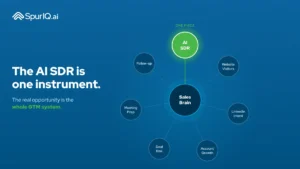
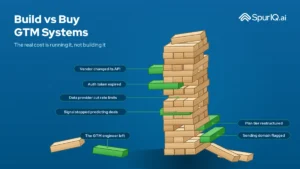
Seven plays running well is not simple. Most teams have signal detection in one tool, sequencing in another, CRM in a third, conversation intelligence in a fourth, and reps holding the whole thing together with screenshots and willpower. That is not a GTM stack. That is friction with a software subscription attached.
The underlying problem is the signal-to-action gap. Here is where the pipeline leaks:
- A funding announcement is detected in one system.
- The outreach decision is made by a rep who may or may not have seen the alert.
- The outcome is logged in a CRM that was updated two days late.
SpurIQ is the revenue execution platform that closes that gap. It sits on top of your existing stack (Gmail, HubSpot or Salesforce, Calendar, LinkedIn) as an execution layer. No rip-and-replace. We handle the outbound sales automation layer, so reps are not stitching tools together manually.
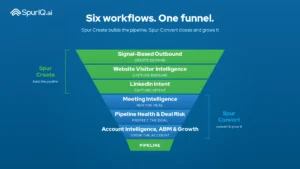
The plays you just read map directly to SpurIQ workflows:
- Play 1 routes each signal type automatically through the Funding and News Trigger, Job Posting Signal, Third-Party Intent Signal Outbound, and Competitor Displacement workflows.
- Play 4 handles warm signal capture through Inbound Form Speed-to-Lead and Website Visitor Deanonymization, so no lead falls through before the five-minute window closes.
- Play 5 runs of Champion Job Change, Closed-Lost Re-engagement, and related warm-source workflows continuously, removing the dependency on rep memory.
- Play 7 is where the platform itself does the work: research briefs before calls, CRM updates after them, and follow-up drafts that do not require reps to spend 20 minutes on notes.
More qualified meetings from the same effort. Follow-ups that do not slip. Deals that do not stall in silence. That is what the system looks like when the plays run on an orchestration layer instead of willpower.
See where your revenue is leaking. Book a 10-minute walkthrough.
The 7 Plays, One System
Successful outbound relies on systems, not standalone tactics. These plays combine buyer signals, AI, outreach, and measurement to drive consistent pipeline growth. Apply these as outbound sales best practices, layering improvements over time instead of all at once.
Here is how to put that system into practice:
- This quarter: Identify your weakest play and fix it first. One play improved and measured is worth more than three plays running halfway.
- Next quarter: Layer in a second play. The play’s compound. Signal-led targeting (Play 1) makes tiered personalization (Play 2) sharper. Multi-channel sequencing (Play 3) works better when deliverability (Play 6) is clean.
- In a year: All seven plays are running, with the KPI framework measuring each one and a team structure to sustain them. That is what a working outbound program looks like at scale. If you are starting from nothing, this is how to build an outbound sales strategy in a single quarter using just the first three plays.
New to outbound? Start with the outbound sales guide for the foundational context on how outbound fits the broader revenue model. If you’re wondering how to improve outbound sales strategies, the answer usually lies in fixing one broken layer rather than rebuilding the whole system.
Looking for tools to run these plays? We are putting together a guide to the best outbound sales software, and we are also updating our best outbound sales strategy software for b2b 2025 guide. Check back soon.
Frequently Asked Questions:
What is the most effective outbound sales strategy for B2B in 2026?
The most effective outbound sales strategy in 2026 combines buyer signals, multi-channel outreach, and tiered personalization. Instead of working from static prospect lists, successful teams engage buyers when meaningful signals such as funding, executive hires, intent spikes, or company growth indicate they’re more likely to be in the market.
The strategy typically includes:
Reaching prospects when buying signals appear.
Using coordinated email, LinkedIn, and phone sequences.
Adjusting personalization based on account value and deal size.
Measuring success by pipeline generated rather than outreach volume.
How many touches does a B2B outbound sequence need?
There is no universal number, but most successful B2B outbound sequences include 10 to 18 touches over 4 to 12 weeks. Enterprise buyers generally require longer sequences than mid-market prospects.
Mid-market outbound sequences typically include 10 to 12 touches spread across 4 to 6 weeks.
Enterprise outbound sequences generally require 12 to 18 touches over a longer period of 8 to 12 weeks.
Brevet Group research shows that many opportunities are won only after multiple follow-ups, with a significant number of responses arriving between the fourth and tenth touch.
What is the right channel mix: email, phone, or LinkedIn?
The strongest outbound programs combine all three channels instead of relying on just one. Email and LinkedIn usually establish context during the first part of the sequence, while phone calls become more effective once prospects recognize your company.
A balanced outbound mix often looks like this:
Email: 35–45%
Phone: 30–40%
LinkedIn: 20–30%
Adding video messages or voice notes later in the sequence can also help re-engage prospects who have not responded.
How much should I personalize each outbound email?
The level of personalization should match the value of the account rather than treating every prospect the same. High-value accounts deserve significantly more research, while lower-priority accounts benefit from scalable personalization using buyer signals.
Tier 1 accounts (the top 10%) should receive deep research and fully customized outreach messages tailored to the specific buyer and company.
Tier 2 accounts (the middle 30%) can be approached with signal-based personalization that uses proven templates while incorporating relevant buyer insights.
Tier 3 accounts (the bottom 60%) typically require basic ICP-based personalization that can be completed in under a minute.
Research from Yes Lifecycle Marketing via Smartlead shows personalized subject lines improve open rates, while advanced personalization can significantly increase reply rates.
What is the average reply rate for B2B cold email in 2026?
The average B2B cold email reply rate is approximately 3.43% according to Instantly’s 2026 Benchmark Report. Campaigns that consistently achieve 5% or higher perform above average, while highly targeted campaigns using strong ICP segmentation and signal-based personalization frequently exceed 10%.
Rather than comparing yourself with averages, focus on steadily improving segmentation, messaging, and targeting.
Should I use AI for outbound, and what should I keep human?
AI works best as a productivity tool, not a replacement for sales professionals. It can automate repetitive work while allowing sales teams to spend more time building relationships and closing deals.
Use AI for:
Prospect research
Data enrichment
First-draft email creation
CRM updates
Meeting summaries
Cadence scheduling
Pre-call preparation
Keep humans responsible for:
Discovery conversations
Objection handling
Negotiations
Executive outreach
Multi-stakeholder relationship management
Organizations that effectively combine AI with human expertise consistently outperform those relying on either approach alone. Gartner data shows sellers who partner effectively with AI are 3.7x more likely to hit quota than those who do not, because AI does the selling and frees reps to do what actually closes deals.
What KPIs predict the outbound pipeline?
Effective outbound teams track more than activity metrics. The best programs measure performance across four different layers.
Activity metrics measure outreach volume, including emails sent, calls made, and touches completed.
Engagement metrics track prospect interactions, such as reply rates, positive responses, and meetings booked.
Pipeline metrics focus on business outcomes, including SQOs, pipeline generated, and outbound win rates.
Efficiency metrics evaluate resource utilization through measures like cost per meeting, cost per SQL, and sales ramp time.
Tracking all four layers helps identify bottlenecks before they impact revenue.
How do I know when to hire my first SDR?
The right time to hire your first SDR is when founder-led or AE-led outbound consistently books qualified meetings, but internal capacity becomes the limiting factor. Hiring before messaging and processes are proven often leads to poor results.
Before expanding your SDR team, ensure you have:
Consistent outbound messaging that converts.
A repeatable prospecting process.
Qualified meetings generated on a predictable basis.
Clear sales handoff procedures.
For most B2B organizations, an initial 1:2 to 1:3 SDR-to-AE ratio provides a strong starting point for scaling outbound efficiently.