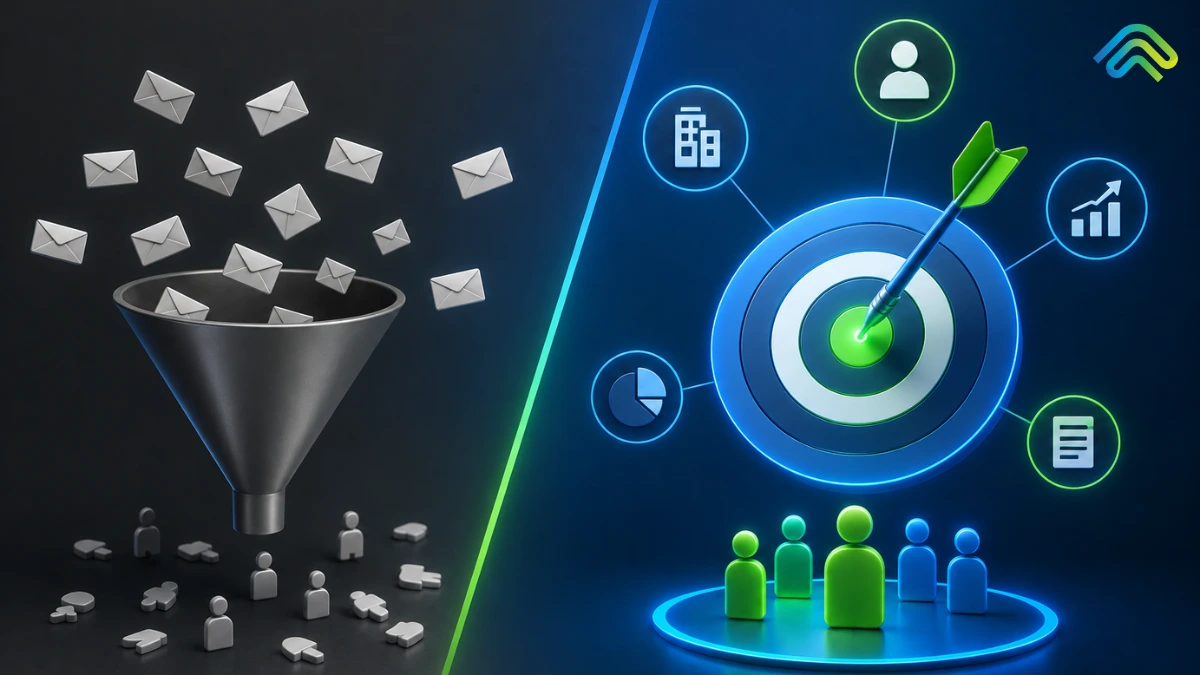
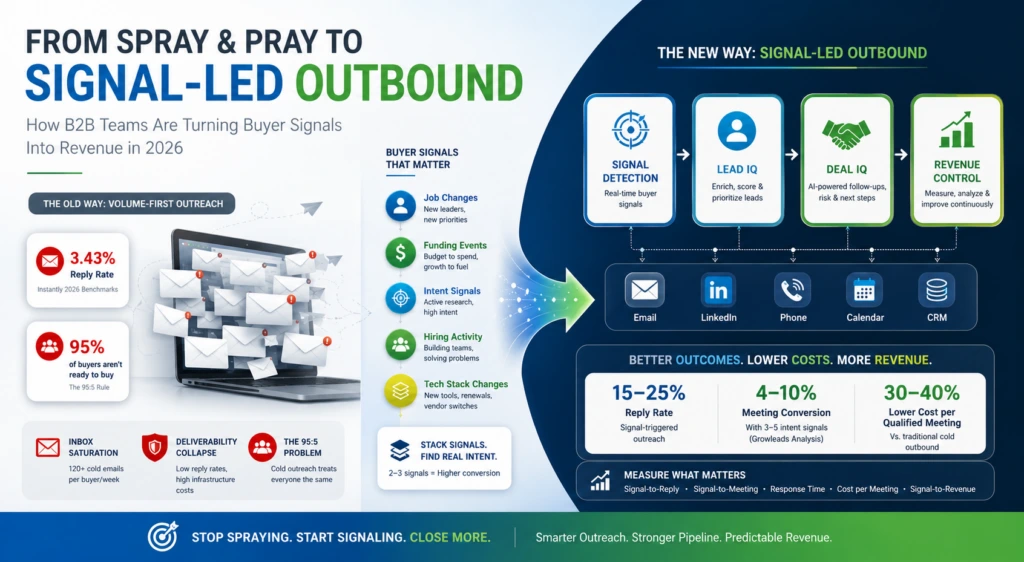
Most sales teams still run on spray and pray. Same list, same email, same silence, every month. Sound familiar? The numbers show how well that works: the average cold email reply rate is just 3.43%, according to the Instantly 2026 Benchmark Report. Fewer than four people respond for every 100 emails sent.
The bigger issue is that 95% of your market is not actively buying at any given time, as explained by Professor John Dawes’ research on the 95:5 Rule. Traditional cold outbound treats every prospect the same, wasting effort on buyers who are not ready while generating low reply rates.
Signal-led outbound changes that focus on buyers already showing purchase intent. Instead of interrupting everyone, it reaches the right people at the right time, often increasing reply rates to 15–25%.
The challenge is that many teams stop after buying a signal detection tool. They can identify intent signals but struggle to turn them into effective outreach. Detection without execution changes very little.
This guide walks through the complete shift from cold outreach to signal-led outbound, covering the four phases, realistic benchmarks, key metrics, and the execution strategies most teams overlook.
Why Signal-Based Outbound Won?
Signal-based outbound didn’t outperform because it reached more prospects. It won because it reached the right prospects at the right moment. Instead of guessing who might be interested, sales teams started acting on real buying signals. Here are the three shifts that changed outbound forever.
1. Inbox Saturation
The average B2B buyer now receives more than 120 cold emails every week. Even well-written messages disappear in crowded inboxes because everyone follows the same volume-first strategy. Signal-based outbound breaks through the noise by reaching prospects after they show buying intent, making every email more timely and relevant instead of just another cold pitch.
2. Deliverability Collapse
Sending thousands of cold emails from a single inbox damages domain reputation and forces teams to invest in burner domains, inbox warm-up, and constant infrastructure maintenance. Signal-based outbound reduces email volume by focusing only on high-intent prospects, helping protect deliverability while generating better results with fewer emails.
3. The 95:5 Problem
At any given time, only about 5% of your market is actively looking to buy, yet traditional outbound treats every prospect the same. Signal-based outbound identifies those in-market buyers through intent signals, allowing sales teams to prioritize outreach where it’s most likely to convert instead of wasting effort on the remaining 95%.
The results speak for themselves. Signal-triggered outreach often delivers reply rates of 15 to 25%. Growleads’ analysis of more than 200 B2B campaigns also found that programs using three to five intent signals achieved 4 to 10% meeting conversion rates. That means up to four times more replies and 30 to 40% lower cost per qualified meeting than traditional cold outbound.
Want to see the difference in action? Read our full comparison of signal-based vs cold outbound.
The 5 Signal Types That Actually Matter
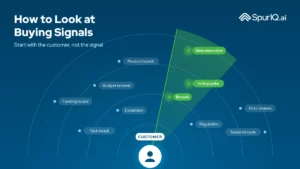
Not every signal is equal. The teams that build high-converting programs start by understanding the difference between a weak signal and a strong one, and they stack them.
Here is a tiered breakdown of these five signals based on conversion potential.
Tier 1: Job changes
A new VP or Director stepping into a target role is one of the most powerful buying signals in B2B. They are rebuilding their stack. They have budget authority. They are open to new vendors because they are not yet locked into their predecessor’s choices. Reaching a new executive within two weeks of a job change consistently produces strong meeting rates.
Tier 1: Funding rounds
Funding rounds are one of the strongest company-event signals because they often indicate new budget and active investment plans. A company that has just raised money has a budget to spend and a headcount to grow. They are actively evaluating tools they could not justify six months ago. Funding triggers represent a genuine budget event, not vague interest.
Tier 2: Intent signals
Intent signals are buyer actions that indicate active interest in solving a problem. These include pricing page visits, G2 comparisons, competitor research, and content downloads. Furthermore, these signals show active evaluation behaviour. If you spot just one intent signal, it’s probably too early to reach out. But if you see three or more signals stacking up, you’re likely looking at a buyer who’s actively evaluating solutions.
Tier 2: Hiring patterns
A company hiring for the role your product supports is signalling both budget and pain at the same time. If they are building an SDR team, they need outbound tooling. If they are hiring a RevOps manager, they are investing in their revenue stack. Hiring patterns are a leading indicator worth watching closely.
Tier 3: Technographic changes
Tech stack adoptions, contract renewals, and vendor switches move slowly, but they add useful context when layered on top of Tier 1 or Tier 2 signals.
The stacking rule
A single signal is context. Stacked signals are intent.
Most teams that struggle with signal-based outbound are acting on single signals rather than waiting for two or three to align. That is where the conversion gap comes from. Patience in signal stacking pays off more than speed in signal acting.
The 4-Phase Transition From Cold to Signal-Led
Moving from cold outbound to a signal-led strategy is not something you do overnight. It requires a structured process that lets you test, learn, and scale without disrupting your pipeline. The four phases below provide a practical roadmap to help you make the transition with confidence.
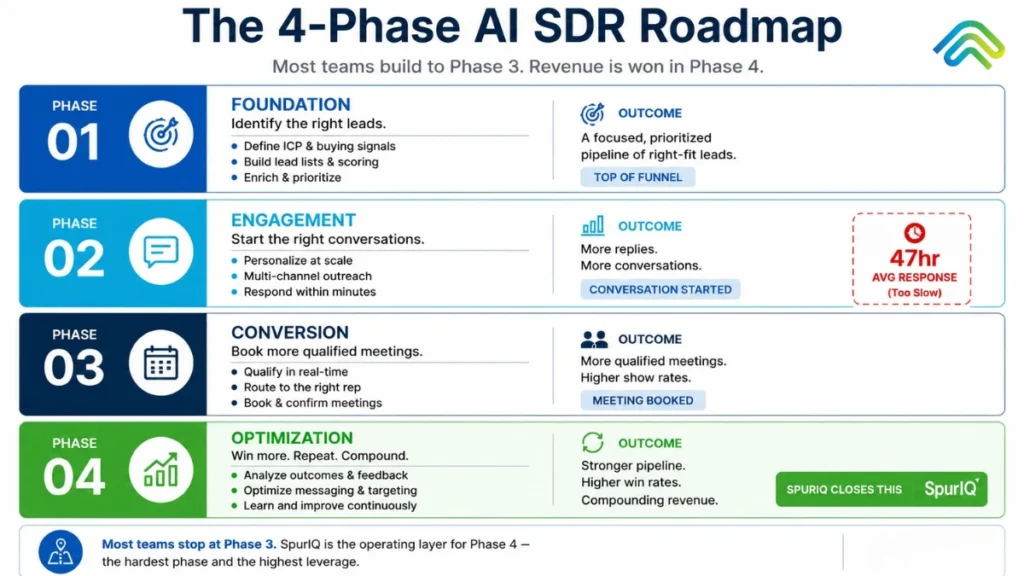
Phase 1: Pick One Signal, One Segment (Week 1 to 2)
Do not try to rebuild your entire outbound program in a week. Pick the single highest-converting signal for your ICP, usually job changes or funding rounds, and one target segment.
Set up detection by connecting one signal source to watch 50 to 100 named accounts. LinkedIn Sales Navigator, Common Room, and Apollo all work for this purpose.
Write two to three outreach templates built around that specific signal. Not generic templates with a signal mention bolted on at the top. Templates where the signal is the entire reason you are reaching out.
Phase 2: Build the Outreach Workflow (Week 3 to 4)
Connect signal detection to outreach execution. When a signal fires, the workflow should enrich the contact, draft contextual outreach, route it through your sequencer, and log the activity in your CRM.
Go multi-channel from the start. Email plus LinkedIn, with an optional phone step. Three to five touchpoints over ten to fourteen days.
One rule matters more than anything else here. Response time beats message perfection. A good email sent within 24 hours of a signal firing outperforms a perfect email sent five days later. As per Optifai’s benchmark study of 939 B2B companies conducted in 2025 and 2026, the average company takes 47 hours to respond to a lead. That delay is where deals are lost before they even start.
Phase 3: Add Signal Stacking and Scoring (Month 2 to 3)
Layer in a second and third signal type. Start scoring accounts by signal stack.
A single signal puts an account at Tier 3. Two signals move them to Tier 2. Three or more move them to Tier 1.
Route differently based on tier. Tier 1 accounts get immediate AE-level outreach. Tier 2 goes into an automated sequence. Tier 3 goes into nurture.
Start tracking signal-to-meeting rate by signal type. This data tells you which signals drive the pipeline in your specific market, not what industry benchmarks say generically.
Phase 4: Close the Execution Loop (Month 3 and beyond)
This is the phase most programs skip. And it is why so many signal-based outbound programs plateau without anyone understanding why.
Signal detection is running. Outreach is going out. Meetings are booked. And then what?
The meeting gets booked, but the follow-up does not happen. The CRM does not get updated. Deal risk shows up in a pipeline review two weeks too late. The top-of-funnel motion is working. The bottom of the funnel is still running on rep memory and manual effort.
Phase 4 is connecting outbound execution to deal execution as one continuous loop. Contextual follow-ups drafted from meeting content. CRM auto-updates after every interaction. Deal risk is flagged before deals go dark. And full visibility into which signals produced closed revenue, not just which signals produced replies.
This is where most signal-based outbound programs stop improving. The detection layer gets sharper every month. The execution layer stays manual. Revenue does not move proportionally.
What to Measure: Benchmarks That Actually Matter
Success with signal-based outbound is not measured by how many emails you send. It is measured by how effectively those signals turn into conversations, meetings, and revenue. Tracking the right metrics helps you spot what is working, fix what is not, and scale with confidence.
Let’s look at the benchmarks that matter most and what each one tells you.
1. Signal-to-reply rate
Benchmark: 15 to 25% for Tier 1 signals. If your triggered outreach is sitting below 10%, the issue is either signal quality or message relevance. Volume will not fix it. For context, as per Instantly’s 2026 Cold Email Benchmark Report, analysing billions of emails across thousands of active workspaces, the platform-wide average for untargeted cold outreach is only 3.43%. That gap is the case for signal-based outbound in a single number.
2. Signal-to-meeting conversion
Benchmark: 4 to 10% across full signal-based programs. As per Growleads’ data from 200+ B2B client campaigns run between 2023 and 2026, this represents a two-to-four-times improvement over cold outbound. This metric matters more than reply rate. A high reply rate with low meeting conversion means your outreach is getting attention but not driving action.
3. Time from signal to first touch
Best-in-class is under 24 hours. As per Optifai’s benchmark study of 939 B2B companies, the average company takes 47 hours to respond to a lead. Every hour of delay degrades conversion. The teams winning with signal-based outbound are not detecting better signals than everyone else. They are acting faster.
4. Cost per qualified meeting
As per Growleads’ analysis of 200+ B2B client campaigns, signal-based outbound produces 30 to 40% lower cost per qualified meeting than cold outbound. Track this by signal source. Some signals will consistently deliver higher-quality meetings at lower cost. Those become your priority channels.
5. Signal-to-revenue (the metric nobody tracks)
Most teams stop at signal-to-meeting. They never connect outbound activity to closed deals.
Without signal-to-revenue data, you cannot tell which signals produce a pipeline that closes versus a pipeline that stalls. You end up optimising for activity, not outcomes. Tracking this metric requires linking outbound data to deal data, which means the execution loop from Phase 4 has to be in place first. See how AI tools are changing sales prospecting for B2B teams for more on connecting these layers.
The Execution Layer Most Teams Miss
Most signal-based outbound programs lose momentum at the same point.
Phases 1 through 3 are relatively easy to get right. Teams detect buying signals, build workflows, score accounts, and send more relevant outreach. Reply rates improve. More meetings get booked.
Then progress starts to slow.
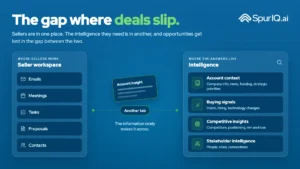
The reason is simple. Everything after the meeting is still handled manually. Reps need to send follow-ups. CRM records need updating. Deal risks need attention. These tasks rarely happen consistently because they depend on people instead of a system.
The top of the funnel runs on real-time signals. The bottom of the funnel still relies on rep memory. That is not a performance issue. It is an execution gap.
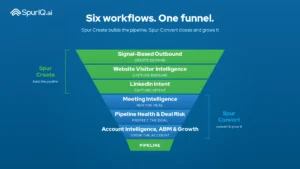
A true execution layer connects every stage of the sales process into one continuous system. Signals trigger outreach. Outreach leads to meetings. Meetings generate contextual follow-ups. CRM records update automatically. Deal risks are flagged before opportunities go quiet. The system also tracks which signals lead to closed revenue instead of just replies, then uses those insights to improve the next cycle.
This is exactly what SpurIQ is built to do.
- Lead IQ manages signal-based outbound from start to finish. It detects buying signals, enriches contacts, drafts personalized outreach, routes messages through your sequencer, and automatically logs activity in your CRM. You get a consistent outbound process without adding manual work. See how AI SDRs fit into this motion.
- Deal IQ takes over after the meeting is booked. It captures conversations, drafts contextual follow-ups, keeps your CRM up to date, and flags deal risks before opportunities begin to stall. Every interaction stays connected to the sales process, so nothing slips through the cracks. Learn more about the full outbound sales system.
Revenue Control brings both systems together. It measures signal-to-revenue instead of only signal-to-meeting and feeds performance data back into a continuous learning loop. Every campaign becomes smarter with every cycle.
Studies have found that sales representatives spend as much as 70% of their time on non-selling work such as administrative tasks, CRM updates, and follow-up coordination. SpurIQ removes much of that manual effort by building it directly into the workflow, giving sales teams more time to focus on conversations and closing deals.
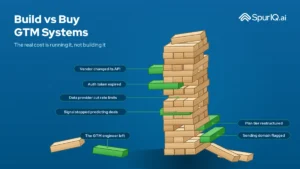
The result is agency-like lead generation outcomes, product-like control, and modular GTM engineering. All of this comes without the cost of hiring an agency or the complexity of building the technology stack yourself.
You also do not need a GTM engineer to set everything up. SpurIQ is a done-for-you service. The team designs and deploys your signal-based workflows, hands you a proven system that is ready to run, and lets your reps focus entirely on conversations and closing.
The Bottom Line
Signal-based outbound isn’t a tool you buy. It’s a system you build, from detection through outreach through deal follow-through through measurement. Most teams get stuck at detection. They find the signal but lose the execution. The teams that win build the full execution loop and close it at every stage.
SpurIQ is the modular revenue execution system that makes signal-based outbound actually work, from first signal to closed deal. See how it works at spuriq.ai/demo.
Frequently Asked Questions
What is signal-based outbound?
Signal-based outbound is a way of doing outreach based on real-time buyer activity instead of static lead lists. Instead of contacting thousands of random prospects, you focus only on accounts showing buying signals such as job changes, funding announcements, hiring spikes, or intent activity.
These signals indicate that a buyer is active in the market right now, which makes outreach more relevant and better timed.
Research from Instantly’s 2026 Cold Email Benchmark Report shows a major gap in performance. Cold outbound averages around a 3.43% reply rate, while well-targeted triggered outreach can reach 15 to 25%.
What are the best tools for signal-based outbound?
Signal-based outbound typically requires multiple tool categories working together. Each layer handles a different part of the workflow.
Key tool categories
- Signal detection tools identify buying triggers in real time
- Enrichment tools fill in accurate contact and company data
- Outreach tools manage sequencing and message delivery
- End-to-end systems connect signals, outreach, and revenue tracking in one workflow
Tool comparison
| Function | Tools | Purpose |
| Signal detection | Common Room, Bombora, LinkedIn Sales Navigator, Apollo | Identify buying signals such as intent, hiring, and engagement |
| Contact enrichment | Clay, Apollo, ZoomInfo | Add verified emails, roles, and company data |
| Outreach sequencing | Outreach, Salesloft, Lemlist | Automate and manage outbound messaging |
| End-to-end execution | SpurIQ | Connect signals, outreach, follow-ups, and CRM tracking in one system |
What are realistic ROI benchmarks for signal-based outbound?
As per Growleads’ data from 200+ B2B client campaigns (2023 to 2026), expect 4 to 10% signal-to-meeting conversion and 30 to 40% lower cost per qualified meeting versus cold outbound. Most teams see early wins within the first 60 to 90 days, with full ROI realisation typically taking around six months.
Why is signal-based selling becoming popular in outbound sales?
Signal-based selling is growing because traditional outbound methods are becoming less effective.
Key drivers behind the shift
- Inbox saturation has reduced response rates across cold outbound campaigns
- Deliverability issues penalize high-volume sending and harm domain reputation
- Research from the Ehrenberg-Bass Institute highlights the 95:5 rule, which states that only 5% of your market is actively buying at any given time
Signal-based outbound focuses on the active 5%, which makes outreach more relevant and efficient compared to broad cold targeting.
How do I start signal-based outbound with a small team?
Starting simple is more effective than building complex systems too early.
Step-by-step approach
- Choose one clear signal type, such as hiring activity or funding events
- Define a focused ICP segment with 50 to 100 target accounts
- Build a basic workflow: detect signals, enrich data, send outreach, and log activity in CRM
- Track the signal-to-meeting rate from the beginning
- Add more signals or scoring logic only after the first workflow proves consistent results
The key principle is to keep the system simple at the start and improve it gradually based on real performance data.
What is the difference between signal-based outbound and intent data?
Intent data is only one part of a broader signal-based outbound system.
| Aspect | Intent Data | Signal-Based Outbound |
| Definition | Tracks research behavior like page visits and comparisons | Uses multiple real-time buying signals |
| Data types | Mostly online research signals | Intent, events, engagement, and firmographic changes |
| Examples | G2 visits, pricing page views | Job changes, funding rounds, hiring spikes, tech adoption |
| Scope | Narrow | Broad and multi-layered |
| Strategy | Single signal focus | Multi-signal stacking for stronger targeting |
| Outcome | Early buying interest | Higher precision and timing accuracy |